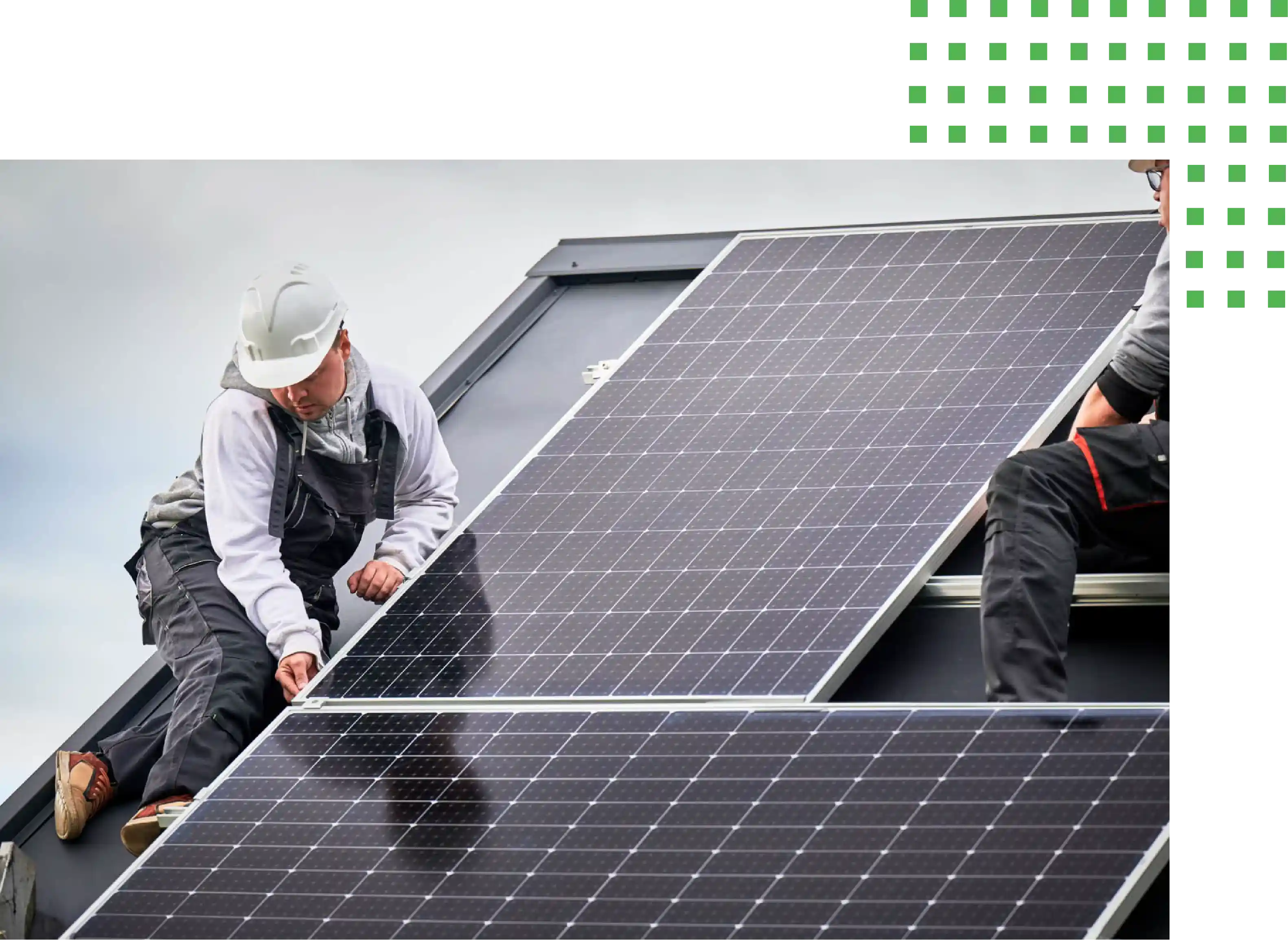

Within a particular year, there is no “bad” time, but it is ideal to install your solar panel system during the spring or summer to build up your excess energy production credits to get you through the winter/early spring. In particular, when you’ve put on a new roof can be a great time to install solar panels, too, as the panels are warranted for 25 years, and could last much longer since there are no moving parts.
Our solar panels are guaranteed to output at a certain level through year 25. However, this does not mean that they stop producing electricity after year 25, in reality most panels will still produce 85%+ of the energy they were producing in year 1!
The average homeowner can generate a lifetime savings of $90,000 or even $100,000 from installing solar panels. Utility companies will also provide a service called net metering, where they will give you “credits” for the energy your system produces. States may also provide tax incentives for you as a homeowner for installing your system. In short, there are many ways to save once you make the switch to solar.
Leaks and damages are extremely rare as proper installation will actually add a third layer of protection to those areas of your roof!In the rare situation that your roof is damaged, we’ve got you covered through our workmanship warranty.
The 30% federal Residential Clean Energy Credit is not available for systems placed in service after December 31, 2025. If your qualifying system was installed by that date, you may still be eligible to claim the credit using IRS Form 5695 or carry forward an unused eligible credit. Ask your tax professional about your circumstances. Business solar projects follow separate tax rules. See current IRS guidance.
Yes, solar panels can increase the value of your home due to their potential for energy savings, tax incentives, investment value, and more. Studies, like this one from Lawrence Berkeley National Laboratory, show that homes with solar panels tend to sell faster and at a premium compared to those without solar systems.
In most states, utility companies provide a program called “Net Metering.” This allows a homeowner to overproduce electricity during the day and in the months with the most sunshine.The excess electricity generated will build as credits in your utility account and you will be able to pull from those credits at night and during the less sunny periods of the year. The goal is to end up at a “wash” each year.
When your panels are covered with snow, you may receive alerts from the system. This is to be expected, and once the snow melts, your panels will return to normal.
Not every home is perfect for solar and that’s okay! We work with you to determine if your home would be a good fit for solar. If you have recently replaced your roof and you don’t have any larger trees hanging over your house, you have a great shot of being a good candidate for solar.
Most solar panels are warranted against the weight of ~4 +feet of snow, 140mph winds and 1” of hail. Anything beyond that is also covered by homeowner’s insurance in most cases. Definitely speak to your insurance agent for more details.
Net metering is an electricity billing mechanism that allows the homeowner to be billed for the “net” amount of energy used. The homeowner receives credits for the electricity that is added to the grid. Net metering is available in most states, but please ask us about your specific location. Read more about net metering in our latest blog.
Not typically, Your Solar panels do not increase property taxes in most US states although it is always a good idea to check with your local building offices.